 Anacortes Exterior
 Board & Batten Siding Built for Oak Harbor's Coastal Climate
Board and batten siding has a distinct, clean-lined look — wide vertical panels with narrow battens covering the seams — that works well on farmhouse-style homes, gable accents, and full exterior facades alike. But in Oak Harbor, that look has to survive more than it does in drier inland climates. Homes here deal with salt-laden air off the water, long stretches of driving rain, and a moss season that can run for months. Siding that isn't specified and installed correctly for those conditions will show it within a few years — cupping, staining, soft spots at the seams, and paint failure are the usual signs.
We install board and batten siding using James Hardie fiber cement exclusively, and this page walks through what makes the style work (or fail) in this specific environment, what a correct installation actually involves, and why local installation experience in Skagit County and the surrounding islands matters more than most homeowners expect.
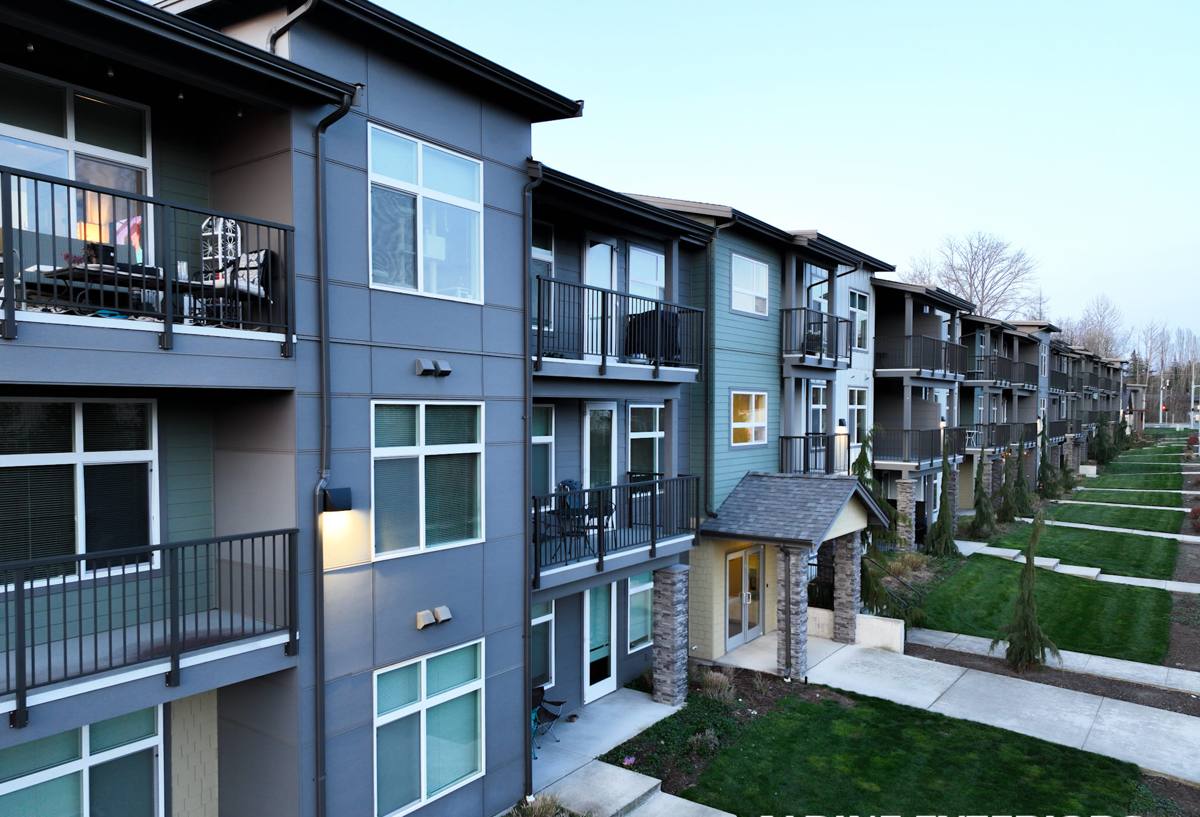
What Oak Harbor's Climate Actually Does to Vertical Siding
Vertical board and batten siding has more exposed seams per square foot than horizontal lap siding, and every one of those seams is a place water can find its way behind the cladding if it isn't detailed properly. Three regional factors make that a bigger deal here than in a lot of other places:
- Salt air: Airborne salt accelerates corrosion of fasteners and metal flashing, and it degrades cheaper paint films faster than inland exposure does.
- Driving rain: Wind-driven rain off the water doesn't just fall on siding — it pushes into gaps, laps, and butt joints that would stay dry in a calmer climate.
- Extended moss and moisture season: Long damp stretches with limited direct sun mean any organic material or paint film with weak mildew resistance stays wet longer and grows moss and algae faster.
None of that makes board and batten a bad choice — it means the material and the installation details have to be chosen for this specific exposure, not for a catalog photo.
Why We Only Install James Hardie for This Style
Board and batten is available in several materials, and we've made a deliberate call to install only James Hardie fiber cement for it. The reasoning is straightforward: fiber cement doesn't swell, rot, or delaminate the way wood-based or wood-adjacent products can when they take on repeated moisture. It's also non-combustible, which matters to insurers and to homeowners thinking about long-term risk, not just curb appeal.
James Hardie's HZ10 product line is engineered for climates with cold, wet weather and high moisture exposure — which describes Oak Harbor and the broader Puget Sound region well. The factory-applied ColorPlus finish is baked on and warranted against fading and flaking in a way field-applied paint on other substrates typically isn't. For a style like board and batten, where seams and butt joints are numerous, that consistency in the material itself takes one major variable out of the equation before installation even starts.
We don't install vinyl board and batten, engineered wood panels, or primed wood battens. Each of those can look fine on day one, but they carry trade-offs — moisture sensitivity, field-paint maintenance cycles, or limited warranty coverage — that we're not willing to put our name behind on a home that has to stand up to this specific climate for decades.
Material Comparison for Board & Batten Applications
| Material | Moisture Behavior in Wet Coastal Climates | Finish Durability | Typical Warranty Structure |
|---|---|---|---|
| James Hardie fiber cement | Engineered HZ10 line resists moisture-related swelling and cracking | Factory-baked ColorPlus finish, not field-dependent | Strong transferable product warranty |
| Engineered wood panel siding | Vulnerable to swelling at cut edges and seams if moisture intrudes | Factory finish varies by manufacturer | Often more limited on moisture-related claims |
| Vinyl board and batten | Won't rot, but can warp or fade under sun/salt cycling | Color is through-body but can chalk over time | Generally prorated after initial years |
| Primed wood battens/boards | Highest maintenance burden; needs repainting and caulking on a cycle | Fully dependent on paint quality and reapplication schedule | Typically none beyond material defects |
What a Correct Board & Batten Installation Requires
The visual appeal of board and batten is simple, but getting it to perform for 30+ years in a wet, salty climate takes real attention to detail. A correct installation on an Oak Harbor home includes:
- A drainable water-resistive barrier behind the siding, not just building wrap tacked flat against the sheathing
- A rainscreen gap (furring strips or a drainage mat) so any water that does get behind the panels can drain and dry rather than sitting against the substrate
- Corrosion-resistant fasteners appropriate for coastal exposure, driven to Hardie's specified pattern and depth
- Properly flashed and sealed butt joints, corners, and penetrations — the places vertical siding is most likely to leak if rushed
- Correct board and batten reveal and batten spacing so the panels can expand and contract with temperature and moisture without stressing the joints
- Factory-cut and factory-primed edges used wherever possible, with field cuts sealed per manufacturer specification
Skip any one of these and the siding can still look right for a season or two. The problems show up later — usually as staining below butt joints, soft trim at the base of battens, or paint that fails years ahead of schedule.
Our Process for Oak Harbor Board & Batten Projects
1. On-Site Assessment
We look at the existing wall assembly, current siding condition, moisture exposure on each elevation, and how the home is oriented relative to prevailing wind and rain. Oak Harbor homes facing open water or exposed rises often need different detailing than homes tucked behind tree cover or other structures.
2. Substrate and Moisture Barrier Prep
Old siding is removed, sheathing is inspected for hidden rot or damage, and a drainable water-resistive barrier and rainscreen system are installed before a single piece of Hardie goes up.
3. Board & Batten Installation
Panels and battens are installed to James Hardie's fastening and clearance specifications, with attention to butt joint sealing, corner details, and consistent reveal lines.
4. Trim, Flashing, and Final Detailing
Window and door flashing, kickout flashing at roof-wall intersections, and trim work are finished and inspected before final cleanup.
5. Walkthrough
We walk the finished job with the homeowner, point out care details specific to the material and finish, and answer questions about the warranty coverage.
Why Hiring a Crew That Already Works Oak Harbor Matters
Board and batten installation mistakes are often invisible until they've caused damage — a slightly wrong reveal, a missed flashing detail, a fastener pattern that doesn't account for coastal wind loads. A crew that already works in Skagit County and the surrounding water-exposed communities has already seen how local exposure plays out over time: which elevations take the worst of the driving rain, where moss establishes fastest, and which details actually matter versus which are just manufacturer boilerplate. That local pattern recognition is hard to substitute with a crew that mostly works inland or in a different climate zone.
It also matters for warranty follow-through. James Hardie's product warranty and any installation warranty we provide are only as good as the installer standing behind them — a local, established crew is easier to hold accountable and easier to reach if a question comes up five or ten years down the road.
Checklist: What to Ask Before Hiring Anyone for Board & Batten Siding
- Do they install James Hardie exclusively, or will they substitute a cheaper vertical siding product without discussing the trade-offs?
- Will they install a rainscreen/drainage gap behind the siding, or fasten directly to the water-resistive barrier?
- Can they explain their butt joint and corner flashing approach in plain language?
- Do they carry manufacturer certification or documented Hardie installation experience?
- Do they have ongoing work in Oak Harbor or nearby Skagit County communities, or is this a one-off trip?
- What does their workmanship warranty cover, and for how long?
Living With Board & Batten Siding in This Climate
Once correctly installed, James Hardie board and batten siding is genuinely low-maintenance compared to wood-based alternatives, but "low-maintenance" doesn't mean "zero-maintenance" in a climate like this one. A yearly rinse to knock loose moss and organic buildup before it takes hold, keeping gutters and downspouts clear so runoff doesn't sheet directly down the siding, and a periodic visual check of caulked joints and trim are all worth the small amount of time they take. Because the ColorPlus finish is factory-applied and warranted, you're not on a repainting cycle the way you would be with field-painted materials — that's one of the clearest practical advantages board and batten owners in this climate notice over time.
Ready to Talk About Board & Batten for Your Home?
If you're considering board and batten siding for a home in Oak Harbor, we're happy to take a look, walk you through what correct installation involves for your specific exposure, and give you a straightforward, no-pressure estimate. Use the form below to get started.