 Anacortes Exterior
 Roofing in Old Town Anacortes Is Its Own Job
Old Town Anacortes sits close enough to the water that salt air is part of daily life, and that changes how a roof ages. Add in Skagit County's long, wet fall-through-spring stretch and the shade from mature trees on many of the older lots, and you get a set of conditions that are harder on a roof than what you'd see a few miles inland. A shingle roof that's a good fit for a dry, open subdivision isn't automatically the right call for a home a few blocks from the water in Old Town. The materials, the ventilation, and the install details all need to account for what this neighborhood actually throws at a roof year after year.
We work on homes in this area regularly, and the patterns repeat: moss buildup in shaded valleys and north-facing slopes, corrosion on fasteners and flashing that weren't rated for salt exposure, and wind-driven rain finding its way in at edges and penetrations that were sealed for a milder climate. None of that means asphalt shingles are the wrong choice here — they're still one of the most practical, cost-effective roofing systems available, including for coastal Skagit County homes. It means the details of the job matter more than they would somewhere drier.
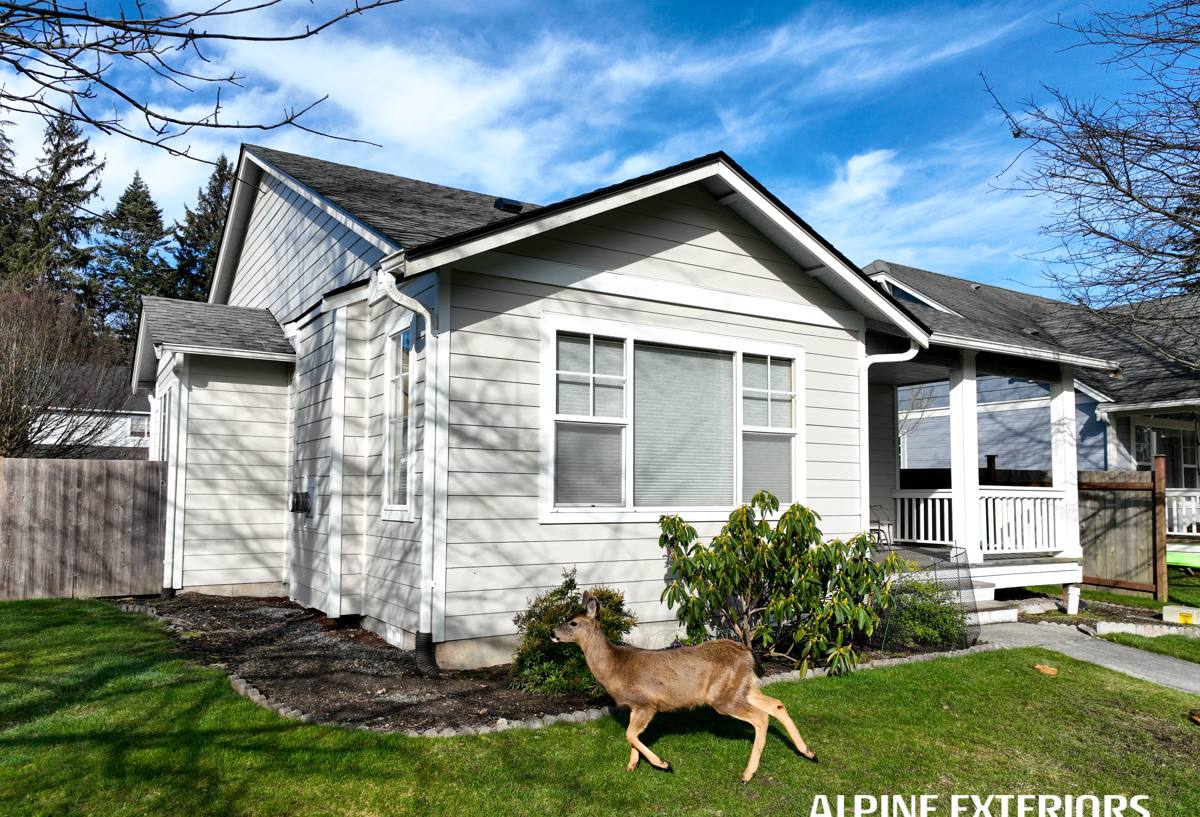
What Old Town Homes Need From a Shingle Roof
Salt Air and Metal Components
Salt-laden air accelerates corrosion on anything metal — nails, flashing, valley metal, drip edge. Standard electro-galvanized fasteners can start showing rust streaks and weakening well before a shingle roof would otherwise need attention. For homes in Old Town, we specify corrosion-resistant fasteners and flashing rated for coastal exposure as a baseline, not an upgrade.
Moss and Shade
Anacortes' tree cover and marine moisture make moss one of the most common issues we're called out for. Moss holds water against the shingle surface, works its way under tabs, and can lift granules over time, which shortens the life of the roof and creates entry points for water. Roofs with north-facing slopes or heavy tree cover need moss-resistant shingles and a maintenance plan that keeps growth from establishing in the first place.
Driving Rain and Wind
Storms off the water bring rain sideways, not just straight down. That puts real stress on the seal along eaves, rakes, and any roof penetration — vents, chimneys, skylights. A roof that looks fine from the ground can still have marginal flashing work that lets water in during a hard blow. This is one of the most common root causes we find when we're called out for a leak on an otherwise decent-looking roof.
What a Correctly Installed Shingle Roof Includes
A roof that's actually built for this climate isn't just shingles nailed to a deck. Every layer underneath the visible shingle does real work, and skipping or shortcutting any of them is where premature leaks and shortened roof life come from.
- Sound deck: any soft, rotted, or delaminated sheathing gets replaced before new shingles go down — covering a bad deck just hides the problem.
- Ice-and-water shield at eaves and valleys: this self-adhering membrane is the backup layer where water is most likely to back up or pool, which matters in a climate with sustained wet weather.
- Synthetic underlayment across the field: a water- and wind-resistant layer under the shingles, standard on any roof we install.
- Corrosion-resistant drip edge and flashing: especially important this close to the water.
- Proper nailing pattern: correct nail count and placement per manufacturer spec, not just "enough to hold it down" — this directly affects wind rating and warranty validity.
- Balanced attic ventilation: intake at the eaves and exhaust at the ridge, sized to the attic volume, so moisture doesn't get trapped against the underside of the deck.
Ventilation Matters More on Older Homes
A lot of the housing stock in Old Town Anacortes predates modern building code, which means attic ventilation is often minimal or unbalanced — sometimes there's exhaust with little to no intake, or vice versa. In a marine climate, that's a real problem. Trapped moisture condenses on the underside of the roof deck, which can rot sheathing from the inside and shorten the life of a shingle roof no matter how good the shingles themselves are. When we re-roof an older home here, checking and correcting ventilation is part of the job, not an optional add-on. It's often the difference between a roof that makes it to the end of its rated life and one that develops deck problems a decade in.
Choosing the Right Shingle for This Area
Not every asphalt shingle product is built the same way, and the differences matter more in a coastal, moss-prone climate than they would somewhere milder.
| Shingle Type | Typical Lifespan | Best Fit For | Considerations in Old Town |
|---|---|---|---|
| 3-Tab | 15-20 years | Budget-focused reroofs, secondary structures | Lower wind rating; less margin against driving coastal rain and moss intrusion |
| Architectural (Laminate) | 25-30 years | Most primary residences | Good balance of wind rating, appearance, and moss-resistant options |
| Premium/Designer | 30+ years | Historic-character homes, higher-end finish | Heavier profile can better handle wind-driven rain; higher upfront cost |
For most Old Town homes, we recommend a mid-to-upper-tier architectural shingle with an algae-resistant (moss-resistant) granule treatment. The upfront cost difference over 3-tab is modest, and the extended lifespan and better wind performance matter more here than in a drier, more sheltered location.
What Moss-Resistant Shingles Actually Do
Moss-resistant shingles use copper or zinc-infused granules that discourage moss and algae growth over the life of the shingle. They don't make a roof moss-proof — heavy shade and organic debris still create conditions where moss can get a foothold — but they meaningfully slow it down compared to untreated shingles, which matters given how much shade cover exists in this neighborhood.
Our Process on an Old Town Reroof
- On-site inspection: we check the deck, existing ventilation, flashing details, and any problem areas before quoting, not after the job starts.
- Written estimate: materials, scope, and timeline spelled out, with no vague allowances.
- Tear-off and deck assessment: old roofing removed, deck inspected and any damaged sheathing replaced.
- Underlayment and flashing installation: ice-and-water shield at eaves and valleys, synthetic underlayment across the field, corrosion-resistant flashing throughout.
- Ventilation correction: intake and exhaust balanced to the attic if the existing setup falls short.
- Shingle installation: installed to manufacturer nailing spec for full wind-rating and warranty coverage.
- Cleanup and magnetic sweep: job site and yard cleared of debris and stray fasteners.
- Walkthrough: we go over the finished roof and maintenance expectations with the homeowner directly.
What Drives the Cost
Every roof is different, but the same handful of factors determine most of the price on an Old Town reroof.
| Factor | Why It Matters |
|---|---|
| Roof size and pitch | Steeper roofs take longer, need more safety setup, and use more material |
| Deck condition | Rotted or delaminated sheathing found during tear-off adds material and labor |
| Number of penetrations | Chimneys, skylights, vents, and dormers each need individual flashing work |
| Shingle tier | 3-tab vs. architectural vs. premium changes material cost per square |
| Ventilation upgrades | Older homes often need added intake or exhaust vents to balance airflow |
| Access and tree cover | Tight lots and mature trees common in Old Town can affect staging and cleanup time |
We give a firm written quote after seeing the roof in person — asphalt shingle reroofs are one of the more predictable jobs in this trade once the deck condition is known, and we'd rather find surprises during inspection than after we've started.
Maintenance That Actually Extends the Roof's Life
A well-installed roof still needs some upkeep in this climate, particularly around moss and drainage. This is the short list we give homeowners after a reroof:
- Have moss and debris cleared from valleys and north-facing slopes at least once a year — more often under heavy tree cover.
- Keep gutters clear so water isn't backing up under the eaves during heavy rain.
- Trim back overhanging branches that keep sections of the roof shaded and damp.
- After major windstorms, do a visual check (from the ground) for lifted or missing shingles.
- Don't pressure-wash shingles — it strips granules and shortens the roof's life; use a soft wash or gentle rinse instead.
- Schedule a professional inspection every few years, or sooner if you notice granules collecting in gutters.
Why Local Experience in This Neighborhood Matters
Roofing a home in Old Town Anacortes isn't the same job as roofing a newer subdivision house inland. The lots tend to be tighter, the tree cover is heavier, many of the homes have character-driven rooflines with multiple pitches and dormers, and the salt air changes what materials hold up. A crew that hasn't worked this specific area can still do competent work, but they're learning these conditions on your roof. We've dealt with the moss patterns, the corrosion issues, and the ventilation quirks of older Anacortes homes enough times that we're not guessing at what this neighborhood needs — we're applying what already works here.
That local familiarity also shows up in the small decisions that don't make it into a written estimate: which slopes need extra attention to moss resistance, where wind-driven rain tends to find weak points, and how to route material and equipment onto a tight, tree-shaded lot without unnecessary damage to landscaping. Those are the details that separate a roof that just looks finished from one that's actually built to hold up here.
If you're weighing options for a roof in Old Town Anacortes, we're glad to take a look and give you a straight answer on what your home needs. Fill out the form below for a free, no-pressure estimate.