 Anacortes Exterior
 Deck Repair Built for Similk Beach Conditions
Similk Beach sits close enough to the water that every deck in the area is dealing with the same slow, steady pressure: salt-laden air, wind-driven rain that finds its way into places a dry-climate deck would never see moisture, and a moss season that runs longer here than it does even a few miles inland. None of that means a deck is doomed — it means repairs have to account for how this specific stretch of Skagit County actually behaves, not how a generic how-to guide assumes a deck ages.
We work on decks throughout the Anacortes area, and Similk Beach homes tend to show a consistent pattern of wear: fastener corrosion, ledger board moisture, and surface deterioration from standing moss and algae. A repair that doesn't address the actual cause just buys a homeowner a year or two before the same problem resurfaces.
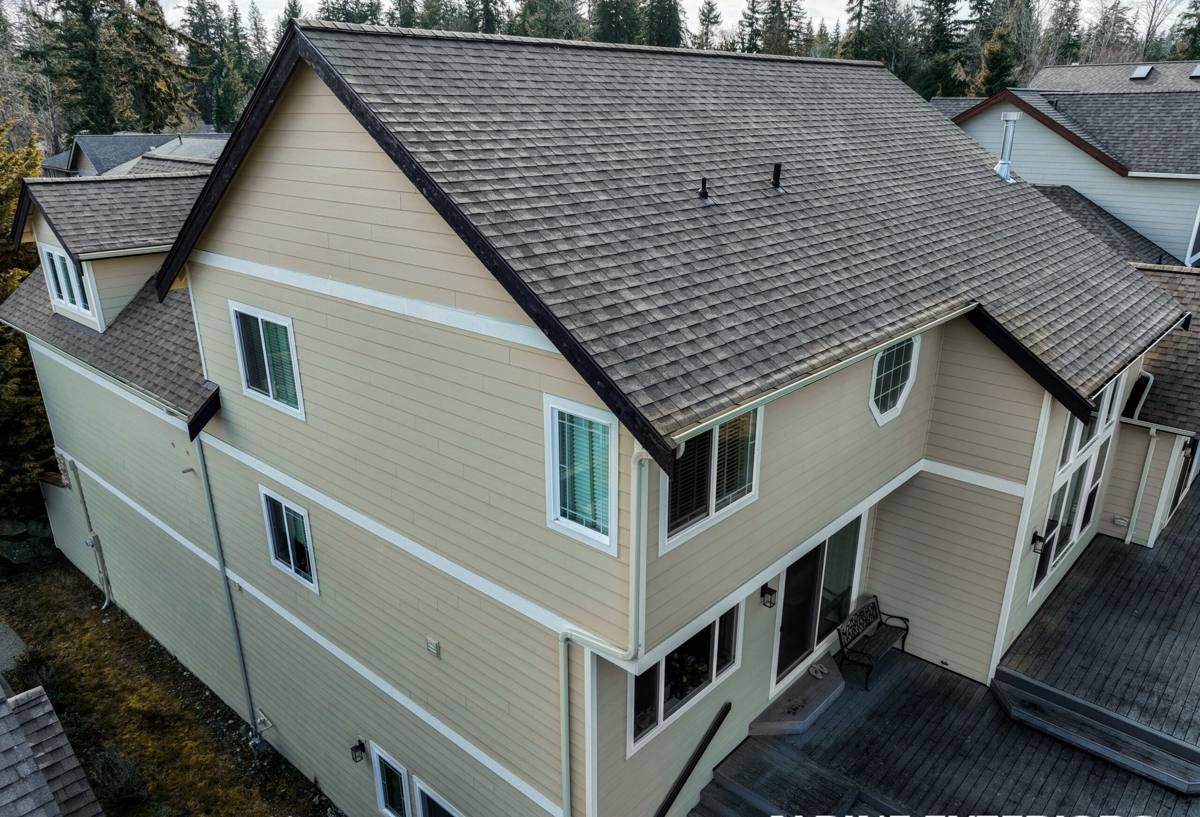
Why the Local Climate Is Hard on Decks
Three things do most of the damage to decks in this area, and they compound each other:
Salt Air
Airborne salt accelerates corrosion on any exposed metal — nails, screws, joist hangers, bolts. Once a fastener starts rusting, it loses holding strength long before the rust is visible from the surface. This is often the real reason a board that "looks fine" is actually loose or springy underfoot.
Driving Rain
Wind-driven rain doesn't fall straight down — it gets pushed sideways and upward under railings, behind ledger boards, and into board-to-board gaps that were never meant to shed water from that angle. Over time this drives moisture into end grain and connection points, which is where rot almost always starts.
Extended Moss Season
Shaded and north-facing decks, or ones tucked under trees, hold moisture longer here than the calendar alone would suggest. Moss and algae aren't just cosmetic — they hold water against the wood or composite surface, keep boards from drying between rain events, and make walking surfaces slick and dangerous long before winter.
Signs Your Deck Needs Repair — Not Just a Cleaning
A pressure wash can make a tired deck look better without fixing anything underneath. Here's what actually signals a repair is due:
- Boards that flex, bounce, or feel spongy when you walk on them
- Visible gaps opening up between the ledger board and the house
- Rust streaks running down from screw heads or joist hangers
- Wood that's soft, dark, or crumbles when probed with a screwdriver
- Railings or posts that wiggle more than they should
- Moss or algae that returns within weeks of cleaning
- Stair stringers or steps that feel uneven or have started to sag
Any one of these on its own might be minor. Several together usually mean moisture has been getting into the structure for a while, not just the surface.
What a Correct Deck Repair Actually Involves
Surface-level fixes — swapping a bad board, tightening a loose rail — have their place, but they're only correct when the structure underneath is sound. A proper repair starts by checking what you can't see from standing on the deck:
Structural Inspection First
Ledger board attachment, joist condition, post bases, and beam connections get checked before anything cosmetic happens. This is where the deck actually fails if it's going to fail — a beautiful new board on top of a compromised joist doesn't solve anything.
Fastener Upgrades Where Needed
Corroded fasteners get replaced with hardware rated for coastal exposure, not whatever standard-grade screw happened to be on the truck. In a salt-air environment, this one detail affects how long a repair actually lasts.
Flashing and Water Management
Where the deck meets the house is the single most common source of hidden rot. Proper flashing at the ledger board, and attention to how water sheds off the deck surface and away from the house, matters as much as the boards themselves.
Board Replacement Done Right
Matching material, proper gapping for drainage and seasonal movement, and correct fastening pattern — not just filling the gap with whatever's on hand.
Repair Versus Replacement: How to Think About It
Not every deck problem calls for a full rebuild, and not every deck is worth patching indefinitely. The honest answer usually comes down to how much of the structure — not just the surface — is affected.
| Factor | Leans Toward Repair | Leans Toward Replacement |
|---|---|---|
| Framing condition | Joists and beams are sound | Widespread rot in structural members |
| Age of deck | Under 15-20 years, good material | Original material at end of service life |
| Extent of damage | Isolated boards or connections | Damage spread across most of the deck |
| Fastener condition | Localized corrosion | Corrosion throughout hardware |
| Design issues | None — problem is wear, not design | Poor drainage or flashing built into original design |
When the framing is solid, targeted repair is almost always the more sensible route — it costs less and gets you years more use out of a structure that's fundamentally fine. When rot has reached the framing itself, patching individual boards is a short-term fix that will keep needing more work.
Our Repair Process
- Inspection. We check the deck from the ground up — framing, connections, fasteners, and surface — not just the parts that are easy to see.
- Honest assessment. We tell you what's actually wrong, what it takes to fix it correctly, and what happens if it's left alone.
- Repair plan. A clear scope covering what gets replaced, what gets reinforced, and what materials and hardware we're using and why.
- The work itself. Structural issues get addressed before cosmetic ones. Fasteners and flashing are treated as part of the repair, not an afterthought.
- Walkthrough. We go over what was done and what to watch for going forward, especially anything specific to how your deck sits relative to sun, shade, and prevailing wind and rain.
Material and Hardware Choices That Matter Here
What a deck is built or repaired with matters more in a coastal climate than it does further inland, mainly because the margin for error with moisture and corrosion is smaller.
Fasteners
Our standard for coastal-exposed decks is corrosion-resistant fastener hardware rated for the exposure the deck actually gets — not the cheapest option that happens to look the same on install day. The cost difference is small; the difference in how long the repair holds is not.
Wood Versus Composite
Both wood and composite decking can perform well here, and both can fail here if installed or repaired without accounting for drainage and ventilation underneath. Wood needs consistent maintenance — cleaning, sealing, and prompt attention to any soft spots. Composite needs less upkeep but is not immune to moisture problems at the framing level, and poor installation can trap moisture against the substructure just as easily as with wood. We'll walk you through the honest trade-offs for your specific deck rather than pushing one material as a blanket answer.
Flashing Materials
At ledger connections and other water-prone points, we use flashing suited to the exposure rather than a minimal-code approach — this is one of the cheapest details to get right and one of the most expensive to fix later if it's skipped.
Why Hire a Crew That Already Works Similk Beach
A contractor who mostly works drier, inland jobs can still do competent general carpentry — but coastal deck repair rewards specific experience. Knowing which connection points fail first in this kind of exposure, which fastener grades are worth the extra cost, and how much drainage and airflow a deck actually needs under Skagit County's rain and moss patterns comes from having done this work in this kind of environment repeatedly, not from a general framing background alone.
We're an Anacortes-based crew, and Similk Beach is part of the area we regularly work in. That means we're familiar with the kind of exposure local decks deal with, and we're not guessing at what holds up here versus what looks fine for a season and then doesn't.
Keeping a Repaired Deck in Good Shape
A correct repair buys you years, but a little seasonal attention extends that further. After a repair, we recommend:
- Clearing debris and standing moss off the surface before it has a chance to sit through a wet stretch
- Checking railings and stair connections for looseness once or twice a year
- Keeping gutters and downspouts clear so runoff isn't dumping extra water onto or near the deck
- Watching for early rust streaks at fastener heads — an early sign worth addressing before it spreads
- Trimming back vegetation that's keeping sections of the deck shaded and slow to dry
None of this takes much time, but it's the difference between a repair that lasts and one that starts unraveling again in a few seasons.
If your deck in Similk Beach is showing soft spots, loose boards, rust streaks, or stubborn moss that keeps coming back, we're happy to take a look. We offer free, no-pressure estimates — just an honest look at what's going on and what it would take to fix it right. Use the form below to get in touch.