 Anacortes Exterior
 Building a Deck That Actually Holds Up on Similk Beach
Similk Beach sits close enough to the water that a deck here lives a different life than one built a few miles inland in Anacortes. The same salt-laden air, wind-driven rain, and shaded, moisture-holding tree cover that define this stretch of Skagit County will find every weak point in a deck within a few seasons if the build doesn't account for them from the start. We've built and repaired decks around this shoreline long enough to know which shortcuts show up as callbacks two winters later, and which details are worth the extra time up front.
This page focuses specifically on custom deck construction for Similk Beach properties — not a generic overview of decks in general. If you're planning a new deck, replacing a failing one, or trying to figure out why your current deck is aging faster than it should, this is what actually matters for a home in this location.
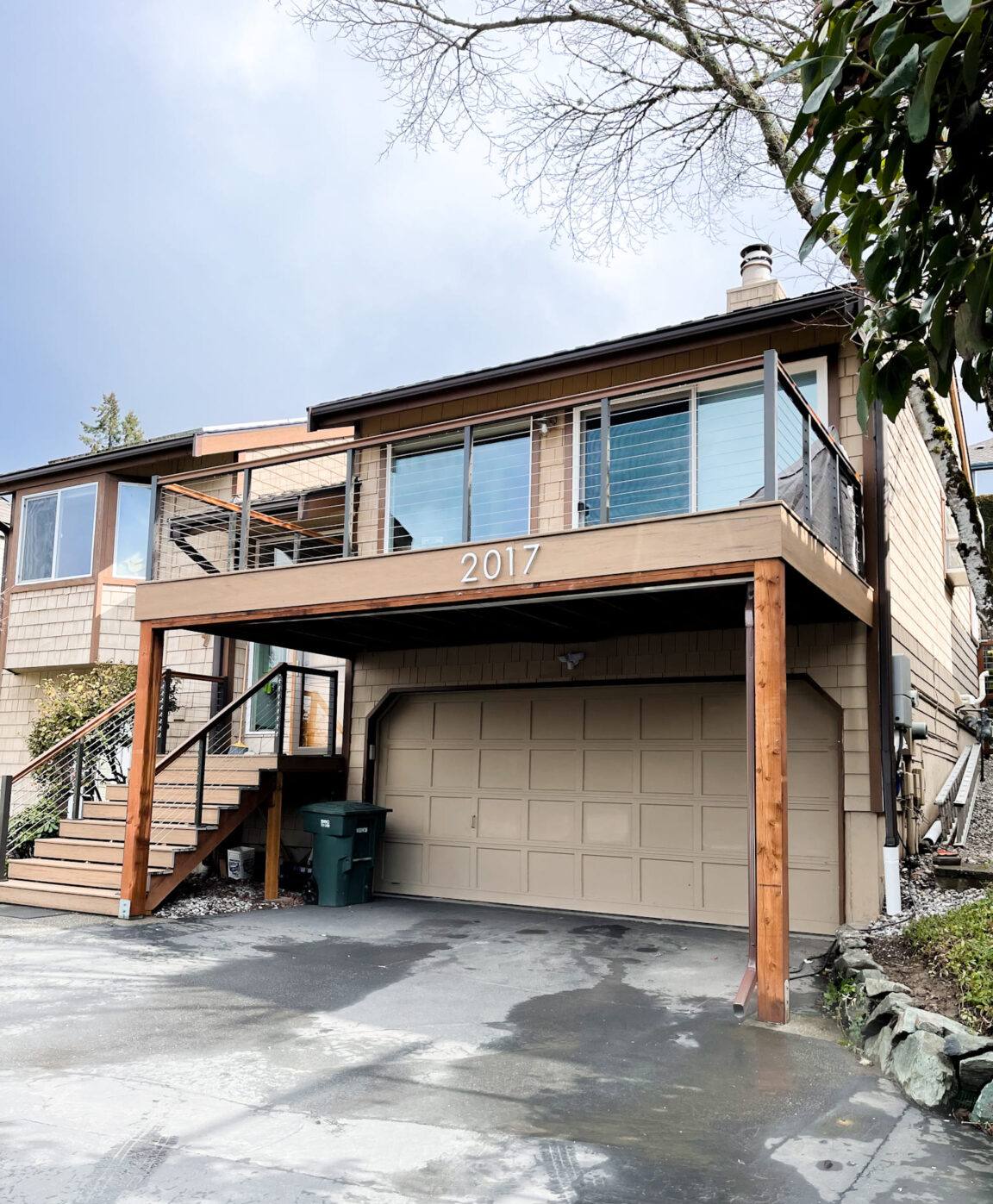
What Salt Air, Rain, and Moss Do to a Deck Over Time
Three environmental factors do most of the damage to decks near the water in this part of Washington:
- Salt air accelerates corrosion in metal fasteners, brackets, and hardware — even products labeled "exterior grade" can corrode faster than expected within a few hundred feet of saltwater exposure.
- Driving rain, especially wind-blown rain that hits a deck at an angle instead of falling straight down, gets up under railing caps, into end grain, and behind ledger boards where standard flashing details sometimes get skipped.
- Extended moss season — which around here can run most of the fall through spring — holds moisture against the deck surface far longer than a quick rain shower would. Moss doesn't just look bad; it keeps wood and even composite surfaces damp for weeks at a time, which is when rot, staining, and slip hazards develop.
None of this means a deck can't last for decades here — it means the material choices, fastener choices, and structural details need to be matched to the site, not just pulled from a standard build sheet.
Choosing the Right Decking Material for a Bay-Front Property
There isn't one "correct" decking material for every Similk Beach home — it depends on your budget, how much upkeep you're willing to do, and how close your lot sits to open water and wind exposure. Here's an honest comparison based on how each material actually performs in this climate, not just how it performs on a spec sheet.
| Material | Moisture & Salt Air Behavior | Moss/Algae Susceptibility | Maintenance Needed |
|---|---|---|---|
| Pressure-treated fir/hem-fir | Good if properly sealed; end grain and cut edges need re-treatment | High — porous surface holds moisture | Annual cleaning and re-sealing recommended |
| Cedar | Naturally rot-resistant but softer; can gray and check faster in wind-driven rain | Moderate to high without regular cleaning | Periodic oiling/staining to maintain color and water resistance |
| Composite (capped) | Very good — doesn't absorb moisture into the core | Moderate — surface can still hold moss film if shaded | Low; periodic washing to prevent surface buildup |
| PVC decking | Excellent — fully moisture-resistant, no wood core | Low to moderate; smooth surfaces shed moss more easily | Low; occasional washing |
For homes with more direct wind and water exposure toward the bay side of the property, we generally steer clients toward capped composite or PVC boards for the field of the deck, since the maintenance burden of natural wood goes up quickly in that kind of exposure. For more sheltered lots, cedar or properly treated wood can still make sense, especially if you like being able to refinish and change the look over time — something you can't do with composite once it's installed.
A Note on Why We're Selective About Certain Products
We don't install every decking product on the market. Some lower-tier composite boards have had moisture-absorption issues at the core in wet climates, and some budget hardware simply isn't rated for coastal or marine-adjacent exposure. That's not a knock on any specific brand — it's a reflection of our own standard: if a product has known moisture-behavior trade-offs or a warranty structure that doesn't hold up to this environment, we'd rather steer you toward something that will still look and perform well in ten years.
Framing, Fasteners, and Footings: Where Waterfront Decks Actually Fail
Most deck failures we see near the water aren't decking-surface problems — they're structural problems hiding underneath a deck that still looks fine from above. The framing, fasteners, and footings do the real work, and they're the parts most likely to get corner-cut on a fast, cheap build.
Footings and Posts
Skagit County's soil moisture and freeze-thaw cycles mean footings need to be sized and set to current code depth, not guessed at. Post bases should sit above grade and be able to shed water, rather than sitting in a wet pocket where a post can wick moisture for years before anyone notices.
Ledger Attachment
Where a deck attaches to the house is the single most common source of hidden rot on older decks in this area. Proper flashing — installed in the right order relative to the house's siding or trim — keeps wind-driven rain from working its way behind the ledger board and into the rim joist. This is one of those details that's invisible once the deck is finished, which is exactly why it needs to be done right the first time.
Fasteners and Hardware
Coastal exposure is hard on standard hardware. We use stainless steel or heavy hot-dip galvanized fasteners and connectors rated for the exposure level of your specific site, rather than defaulting to whatever's cheapest at the yard. Mixing incompatible metals (for example, the wrong screw in the wrong bracket) can actually accelerate corrosion through galvanic reaction, so matching hardware families correctly matters more here than it would on an inland build.
Railings and Surface Details That Matter Near the Water
Railings take a lot of direct weather exposure and a lot of hand contact, so they show wear fast if the wrong materials or details are used.
- Horizontal rail caps should shed water outward, not pool it against end grain or hardware.
- Baluster and post connections should use corrosion-resistant fasteners, not standard interior-rated hardware.
- Any wood railing components benefit from a breathable, water-repellent finish rather than a heavy film-forming coating that can trap moisture underneath once it starts to fail.
- Composite or metal railing systems can reduce long-term maintenance, but should still be checked for how their post sleeves and caps handle water at the base.
Surface texture matters too. A smooth board that looks great on day one can turn genuinely slick under a moss film in January. We factor slip resistance into board selection and orientation, not just appearance.
Drainage and Grading Considerations for Similk Beach Lots
Because many properties in this area sit close to the water, drainage under and around a deck deserves more attention than it would on a typical inland lot. Poor grading or a deck built too low to the ground traps moisture underneath, which is exactly the environment moss, mold, and rot need to take hold. Where possible, we build in enough clearance and slope for water and air to move freely under the deck, and we look at how water sheds off the deck itself so it drains away from the house foundation rather than pooling against it.
On lots with limited clearance, this sometimes means adjusting framing height, adding ventilation gaps, or recommending a drainage system under an elevated deck so the space below stays usable and dry rather than becoming a permanent damp spot.
Our Process for a Similk Beach Deck Project
- On-site assessment — we look at sun/shade exposure, wind direction relative to the water, existing drainage, and any structural issues if this is a replacement.
- Material and layout discussion — we walk through decking, railing, and hardware options honestly, including trade-offs, based on your specific site exposure and budget.
- Permitting — we handle the permit process required for deck construction in your jurisdiction, including any setback or waterfront-proximity requirements that may apply to your lot.
- Framing and structural work — footings, posts, ledger flashing, and framing built to current code with hardware matched to a marine-adjacent environment.
- Decking, railing, and finish work — installed with attention to fastener placement, drainage gaps, and the small details that determine how the deck ages.
- Walkthrough — we go over basic care for your specific materials so you know what maintenance actually matters and what doesn't.
Maintenance Checklist for Coastal Deck Owners
A well-built deck in this climate still needs some seasonal attention. This is the short list we give clients after a build:
- Sweep off leaves, needles, and debris regularly, especially in shaded areas — trapped debris holds moisture and feeds moss growth.
- Clean moss and algae film off the surface before it builds up, using a deck-safe cleaner rather than a pressure washer set too aggressively, which can damage both wood and composite surfaces.
- Check railing posts and hardware once a year for any signs of corrosion or loosening.
- Keep gutters and downspouts near the deck clear so roof runoff isn't dumping extra water onto or near the deck structure.
- Re-seal or re-stain natural wood decking on the schedule appropriate for that product — waiting too long lets moisture get past a failing finish.
- Check underneath the deck once a year for standing water, blocked drainage, or early rot signs at the ledger and posts.
Why Local Experience in Similk Beach Actually Matters
A deck built to a generic, inland spec doesn't automatically fail near the water — but it ages faster, needs more upkeep sooner, and is more likely to develop hidden problems at the ledger, footings, and hardware. Working this shoreline regularly means we already know which details matter most for a given lot's exposure, drainage, and sun/shade pattern, instead of treating every deck the same way. For Anacortes and greater Skagit County homeowners, that local familiarity is often the difference between a deck that needs real attention every year and one that mostly takes care of itself.
If you're planning a new deck or need an honest look at a deck that isn't holding up the way it should, we're happy to come take a look. Reach out for a free, no-pressure estimate — we'll walk the site with you and give you a straight answer on what your Similk Beach property actually needs.