 Anacortes Exterior
 Roofing in Old Town Anacortes: A Different Set of Problems
Old Town Anacortes sits close enough to the water that salt air is simply part of daily life. Add in Skagit County's long wet season, wind-driven rain off the Sound, and months of overcast, moss-friendly weather, and you've got a combination that ages roofing materials faster than it would inland. A roof that might get twenty-five years of quiet service in a drier climate can start showing granule loss, moss colonies, and flashing failures well ahead of schedule here if it wasn't installed with this specific environment in mind.
We install roofs across Anacortes and the rest of Skagit County, and Old Town's older housing stock, tight lots, and mature tree cover mean this neighborhood asks for a slightly different approach than a new-construction subdivision would. This page walks through what we've learned matters most for a new roof here — not generic roofing advice, but what actually holds up a few blocks from the water in this specific part of town.
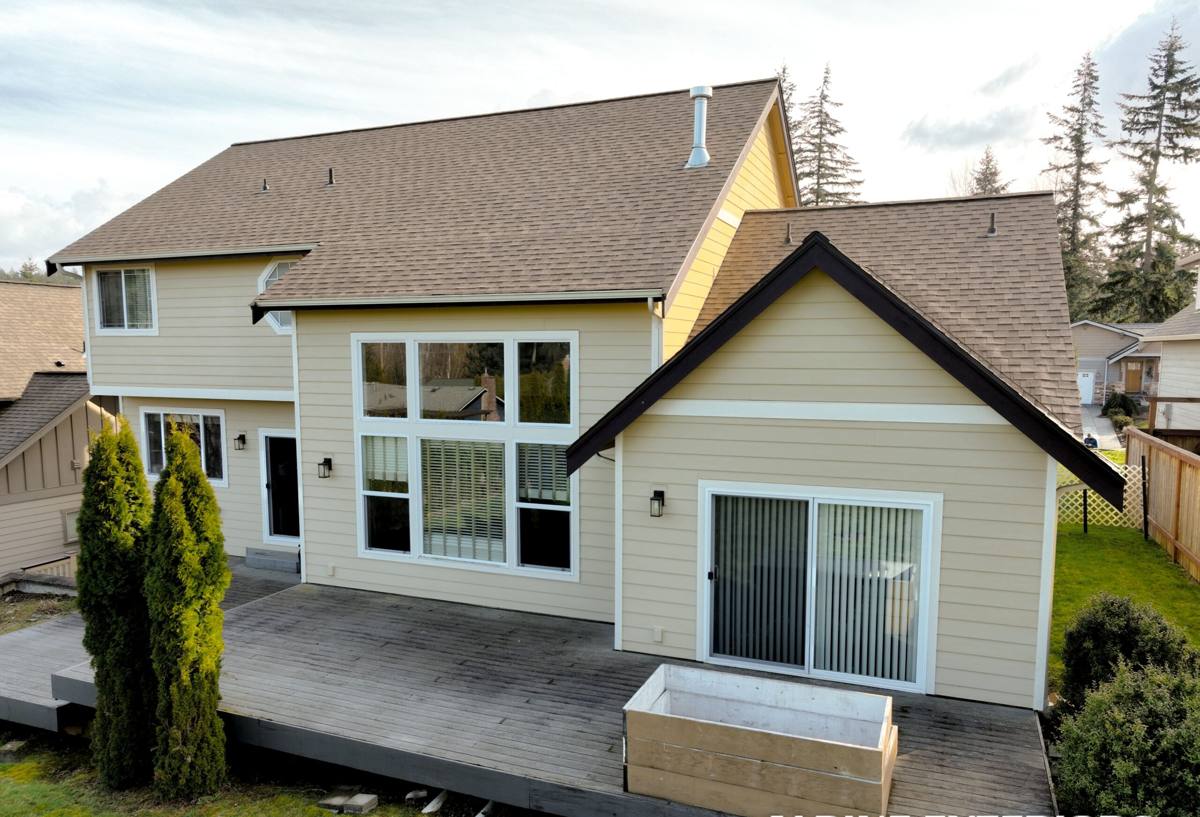
What Old Town's Climate Actually Does to a Roof
Salt Air and Metal Fatigue
Airborne salt accelerates corrosion on anything metal — nails, flashing, vent boots, gutter hangers. Cheap or under-spec fasteners and flashing are the first things to fail on homes near the water, often years before the shingles themselves are worn out. A roof can look fine from the ground while the metal components holding it together are quietly corroding underneath.
Driving Rain and Wind Uplift
Storms off Rosario Strait and the Sound don't always come straight down. Wind-driven rain finds its way sideways into laps, seams, and anywhere flashing is undersized or improperly lapped. The same wind that pushes the rain sideways also puts uplift pressure on shingles and ridge caps, which is why fastening pattern and adhesive sealant strips matter more here than they would in a calmer climate.
Moss Season
Skagit County's shaded, damp winters give moss a long runway to establish itself, especially on north-facing slopes and roofs under tree cover — common in Old Town's older, more established lots. Moss isn't just cosmetic. It holds moisture against the roof surface, lifts shingle edges as it grows, and shortens the life of the material underneath it.
What a Correctly Installed Roof Needs to Include Here
A roof built for Old Town Anacortes isn't just "shingles nailed down correctly." It's a system, and every layer has a job to do against this specific climate:
- Corrosion-resistant fasteners and flashing — stainless steel or heavy-gauge galvanized components, not the minimum-grade hardware that starts rusting within a few seasons of salt exposure.
- Ice-and-water shield at vulnerable points — valleys, eaves, and around every penetration, to stop wind-driven rain that gets past the primary roofing layer.
- Properly lapped, sealed flashing at every chimney, skylight, and wall intersection — this is where most leaks in this area actually start, not in the open field of the roof.
- Balanced attic ventilation — intake at the eaves, exhaust at the ridge, sized correctly for the attic volume. Poor ventilation traps moisture, which speeds up rot, mold, and moss growth from underneath.
- Full-strip fastening at ridge and hip caps, since these are the highest-wind-exposure areas of the roof.
- Zinc or copper moss-control strips under the top course of shingles on shaded or tree-covered slopes, which discourages regrowth for years without chemical treatments.
Choosing Materials That Make Sense Near the Water
Every roofing material has trade-offs, and near-water installations shift which trade-offs matter most. We walk homeowners through this honestly rather than pushing whatever has the best margin.
| Material | Salt Air Behavior | Moss Resistance | Typical Lifespan Here |
|---|---|---|---|
| Architectural asphalt shingles | Good with proper metal components; algae-resistant granules recommended | Moderate — benefits from zinc strips on shaded slopes | 20-30 years |
| Standing seam metal | Excellent when properly coated/finished for coastal exposure | High — sheds moisture, little surface for moss to grip | 40-60 years |
| Cedar shake | Requires more upkeep; moisture retention is a concern near water | Lower — needs regular treatment and cleaning | 20-30 years with maintenance |
| Synthetic/composite shingles | Good — resists corrosion since there's no exposed metal in the material itself | Moderate to high depending on product | 30-50 years |
We don't rule out any of these outright — we rule things in or out based on the specific slope, sun exposure, and tree cover of the home in question, and we're upfront about the maintenance commitment each option carries in this climate.
Our Installation Process
1. On-Site Assessment
We start with a full roof and attic inspection — not just a look from the driveway. We check decking condition, existing ventilation, signs of past leaks, and how much shade and moisture exposure the roof actually gets based on its position on the lot.
2. Tear-Off and Deck Inspection
Full tear-off lets us actually see the decking, not guess at its condition through old shingles. Rot or soft spots get replaced before anything new goes down — installing new roofing over a compromised deck just hides the problem for a few more years.
3. Underlayment and Flashing First
Before a single shingle or panel goes on, we install ice-and-water shield at all vulnerable points and set new flashing at every penetration and wall intersection. This is the layer that actually stops wind-driven rain, and it's the layer that gets skipped or shortcut on cheap jobs.
4. Ventilation Correction
If the attic is under- or over-ventilated, we correct it as part of the install, not as an upsell afterward. Getting airflow right protects the new roof from the inside out.
5. Roofing Installation
Material goes down to manufacturer spec and matched to local wind exposure — full nailing patterns, correct exposure, sealed laps. Ridge and hip work gets the same attention, since that's the first place wind finds a weak seam.
6. Final Walkthrough
We walk the finished roof and the attic with the homeowner, point out what was replaced and why, and explain what routine maintenance — if any — the specific material needs going forward.
Why Local Experience in Old Town Matters
A crew that only works inland doesn't think about salt-air fastener corrosion or moss strips as a default — they're solving for a different climate. Working Old Town Anacortes and the surrounding Skagit County waterfront regularly means we already know which slopes on which lot orientations tend to hold moss, which flashing details fail first in this wind pattern, and which fastener grades are worth the extra cost versus which are a waste of money inland but not here. That's not a sales pitch — it's just the accumulated difference between a crew that roofs everywhere and a crew that roofs here.
Old Town's mix of older homes also means roof decking and framing conditions vary more than in a newer development. We don't quote a job sight-unseen for this reason — what's under the existing shingles matters as much as what goes on top.
Signs Your Roof May Be Due for Replacement
- Granules collecting in gutters or at downspouts in noticeable amounts
- Shingles that are curling, cupping, or losing their flat seal
- Visible moss or algae staining, especially on north-facing or shaded slopes
- Rusted or deteriorating flashing around chimneys, vents, or skylights
- Daylight visible through the roof deck from inside the attic
- Soft spots underfoot or sagging visible from the ground
- A roof already past 20-25 years old, especially with no recent maintenance history
Any one of these doesn't necessarily mean full replacement is the answer — sometimes targeted repair is the honest recommendation. We tell homeowners which situation they're actually in rather than defaulting to the bigger job.
What Affects Cost on an Old Town Roof
| Factor | Why It Matters |
|---|---|
| Roof size and pitch | Steeper, larger roofs take more labor, material, and safety setup |
| Deck condition | Rot or soft decking found during tear-off adds repair cost before new roofing goes down |
| Material choice | Asphalt, metal, cedar, and composite carry different material and labor costs |
| Number of penetrations | Chimneys, skylights, and vents each need individual flashing work |
| Access and tree cover | Tight lots and mature trees common in Old Town can add setup and cleanup time |
| Ventilation upgrades | Correcting inadequate attic airflow adds a modest amount but protects the whole system |
We give a specific number after walking the actual roof — broad estimates without seeing the deck and framing aren't honest ones.
Maintenance After Your New Roof Goes On
A properly installed roof in this climate still benefits from a bit of upkeep. Keeping gutters clear of debris, having moss checked and treated on shaded slopes every year or two, and having flashing points glanced at after major storms goes a long way toward getting the full lifespan out of the material you paid for. We're happy to walk homeowners through a simple maintenance rhythm at the end of every install.
Get a Free, No-Pressure Estimate
If your Old Town Anacortes roof is showing its age, or you just want an honest opinion on whether repair or replacement makes more sense, we're glad to take a look. Fill out the form below for a free estimate — no pressure, no obligation, just a straight assessment from a crew that already works this neighborhood and understands what the local climate demands from a roof.