 Anacortes Exterior
 Bow's Climate Puts Real Demands on a Roof
Bow sits in that stretch of Skagit County where farmland, timber, and saltwater all meet. Homes here catch weather from two directions: moisture rolling off Samish Bay and Padilla Bay, and rain funneling down off the Chuckanut foothills and the timbered acreage that surrounds so many Bow properties. That combination means roofs in this area deal with more than an average Skagit County home a few miles inland.
Three things stand out when we look at a Bow roof: salt-laden air that accelerates corrosion on unprotected metal, long stretches of driving rain that test every seam and flashing detail, and a moss season that can run most of the year on shaded, tree-covered roof slopes. None of these are exotic problems, but they are constant ones, and a roofing system that isn't specified with them in mind will show its age faster than it should.
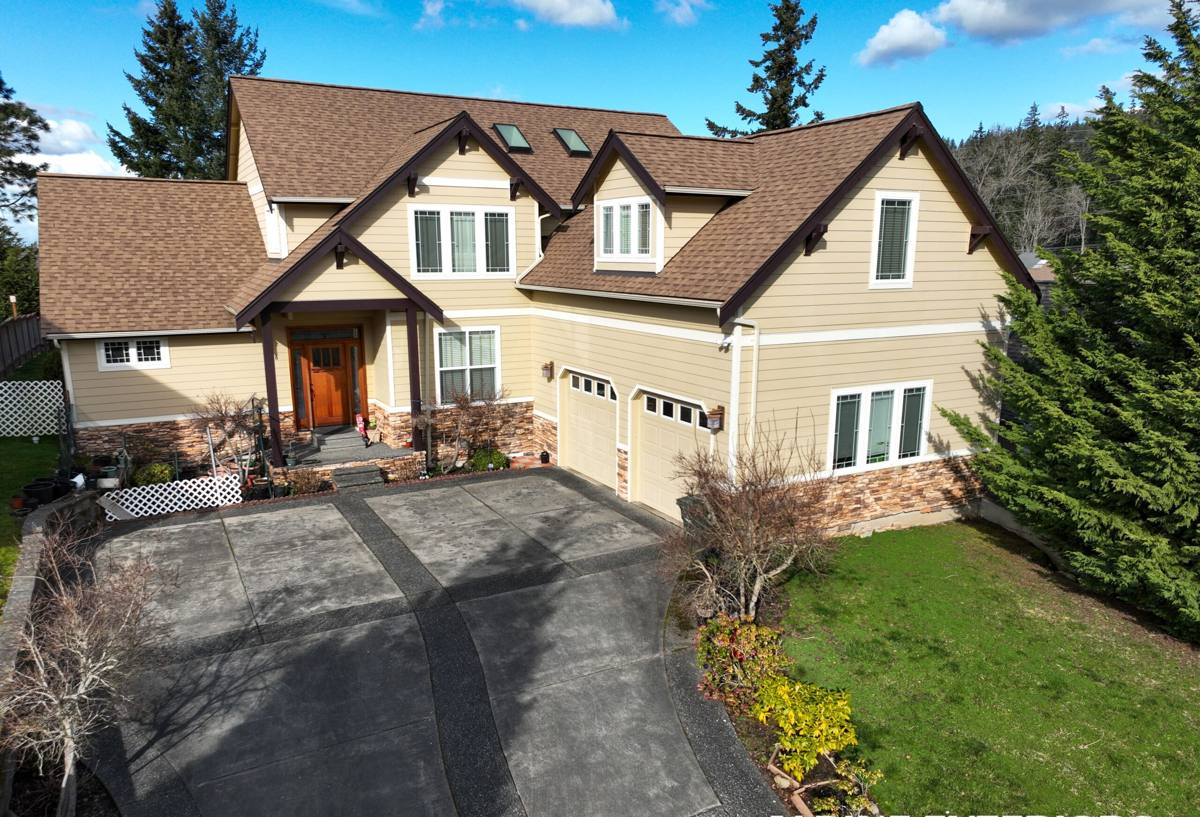
Why Metal Roofing Makes Sense in Bow
Metal roofing isn't the right fit for every home or every budget, but for Bow's conditions it solves several problems at once. A properly installed metal roof sheds water fast, which matters when rain arrives sideways off the water. It gives moss far less to hold onto compared to a shingle surface, which matters on the shaded, tree-lined lots common throughout Bow. And with the right coating system, it resists the slow corrosion that salt air causes on lesser materials.
It's also a roof you install once and generally don't think about again for decades, which appeals to homeowners on rural or larger properties where roof access isn't a five-minute job. That said, metal roofing only delivers on that promise when the panel system, fasteners, and flashing details are matched to the site. That's where a lot of installations — done by crews unfamiliar with coastal Skagit conditions — fall short.
What Metal Roofing Does Well Here
- Sheds heavy, wind-driven rain without relying on shingle overlap alone
- Gives algae and moss spores far less organic surface to establish on
- Handles snow load and ice better than most alternatives, when it does happen
- Holds its finish for decades when the coating is matched to a marine-influenced environment
- Reduces the number of roof penetrations and seams compared to some other systems
Choosing the Right Metal System for a Bow Property
Not all metal roofing is the same, and the differences matter more in a salt-air, high-moss environment than in a dry inland climate. Below is how the main options typically compare for a property in this area.
| System | Best Fit For | Coastal/Moss Notes |
|---|---|---|
| Standing seam (concealed fastener) | Most Bow homes, especially waterfront-adjacent or tree-shaded lots | No exposed fasteners to corrode; smooth panel sheds debris and moss spores well |
| Exposed-fastener panel (screw-down) | Outbuildings, shops, budget-conscious projects | Lower upfront cost, but fastener gaskets need inspection over time in salt air |
| Stone-coated steel | Homeowners wanting a shake or tile look with metal's durability | Textured surface can hold more moss and debris than smooth panel — needs more regular cleaning |
For most of the homes we work on in Bow, we lean toward standing seam because it removes the weak points — exposed fasteners — that salt air works on hardest. That's a professional judgment based on how these systems age in this specific environment, not a knock on exposed-fastener panel, which still has its place on secondary structures.
What a Correct Installation Actually Involves
A metal roof is only as good as what's underneath and around it. Panels themselves rarely fail — the details around them do.
Underlayment and Deck Prep
We start with a high-temperature, self-adhered underlayment at eaves, valleys, and any low-slope transitions, since these are the areas where wind-driven rain is most likely to work its way backward under a panel. On older Bow homes, we also check deck condition carefully; trapped moisture from a prior roof or attic ventilation issue needs to be addressed before new panels go down, not covered up.
Fasteners and Flashing
In a salt-air environment, fastener material matters as much as panel material. Mismatched metals create galvanic corrosion — a slow reaction between dissimilar metals that can stain panels and weaken fasteners over years. We match fastener and flashing metal to the panel system to avoid that entirely, and we detail every penetration, valley, and wall transition with flashing built for this region's rain volume, not a minimum-code approach.
Ventilation
Metal roofing performs best with balanced intake and exhaust ventilation. Without it, condensation can form on the underside of panels, especially in the damper, shaded conditions common on wooded Bow lots. We check existing attic ventilation on every project and correct it when it's inadequate, rather than installing a new roof over an old ventilation problem.
Salt Air and Coastal Corrosion Management
Proximity to Samish Bay and Padilla Bay means airborne salt is a real factor for roofing materials in Bow, even for properties set back from the water. Salt exposure doesn't destroy a roof overnight — it works slowly, attacking any weak point in a coating or any spot where dissimilar metals meet.
We manage this with coating systems rated for coastal exposure, careful attention to cut edges (which expose bare steel if not properly sealed), and fastener specification that avoids galvanic pairing. It's a level of detail that doesn't matter much in dry, inland climates, but it's worth getting right here — the cost of correcting it later is far higher than specifying it correctly the first time.
Moss, Tree Cover, and Debris
Bow's mix of open farmland and dense timber means roof exposure varies a lot from property to property, sometimes from one slope of the same roof to another. North-facing or heavily shaded sections stay damp longer and are where moss and algae take hold first, even on a metal roof, if debris is allowed to accumulate in valleys or against roof-to-wall transitions.
A metal panel's smooth surface makes it much harder for moss to establish compared to a shingle roof, but it isn't immune if pine needles, leaves, or seed debris are left to pile up. We design valleys and eave details to shed debris rather than trap it, and we recommend a simple seasonal check for properties surrounded by conifers or large maples.
Our Process, Start to Finish
1. On-Site Assessment
We walk the roof and attic together, note existing ventilation, deck condition, and any problem areas specific to the property's sun and wind exposure.
2. System Recommendation
Based on that assessment, we recommend a panel type, gauge, and coating suited to the site — not a one-size answer for every Bow property.
3. Detailed, Written Estimate
You get a clear scope of work: materials, fastener and flashing specifications, ventilation corrections if needed, and timeline.
4. Installation
Deck prep, underlayment, panels, flashing, and ventilation work, done in the sequence that keeps the structure protected at every stage — not just at project completion.
5. Final Walkthrough
We review the finished roof with you, point out anything worth knowing for future maintenance, and make sure every question is answered before we consider the job done.
Maintenance Checklist for a Bow Metal Roof
Metal roofing is low-maintenance, not no-maintenance. A few simple habits go a long way in this climate:
- Clear needles, leaves, and seed debris from valleys and gutters at least twice a year on tree-covered lots
- Check for standing debris against any roof-to-wall transition, where moisture and organic material collect fastest
- Look over exposed fasteners (if applicable) every year or two for gasket wear
- Confirm gutters and downspouts are moving water away from the foundation, especially during heavy fall and winter rain
- Have a professional check flashing and sealant at penetrations every few years rather than waiting for a leak
Why It Matters to Hire a Crew That Already Works in Bow
A lot of roofing problems we get called out to fix in this area didn't come from bad materials — they came from installation details that weren't matched to the site. A crew that hasn't worked Skagit County's coastal conditions before may not think to spec corrosion-resistant fasteners, or may not catch a ventilation issue that's been quietly causing condensation for years.
Working in and around Anacortes and Bow regularly means we've seen how these roofs actually perform over time in this specific climate — not just how they're supposed to perform on paper. That local track record shapes the material and detail choices we recommend, and it's part of why we don't treat every metal roof quote the same way regardless of where the house sits.
If you're considering a metal roof for your Bow property, we're happy to take a look and walk you through what your specific home needs — no pressure, no obligation. Use the form below to request a free estimate.